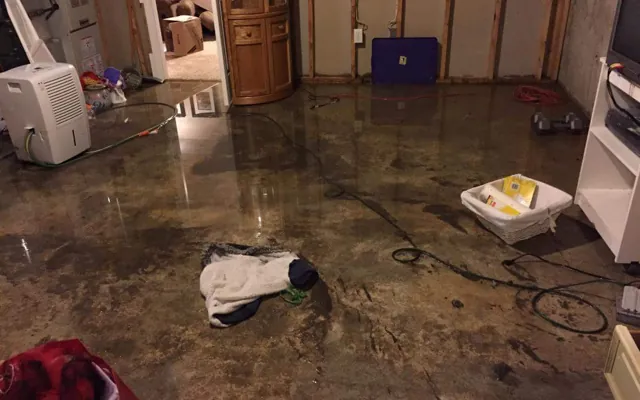
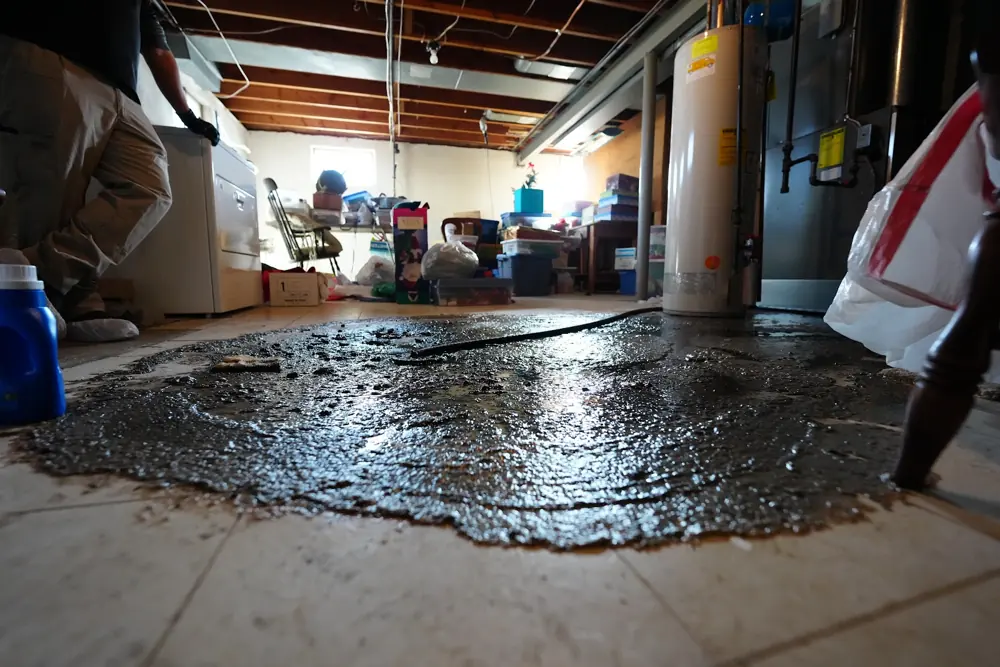
A leaking or ruptured water heater can empty its tank across a Boise garage, basement, or utility closet. Crews extract the water fast and dry the structure to IICRC-standard before it reaches finished space.

Technicians confirm the water and, if needed, the gas or power to the heater are shut off, then extract the standing water before it spreads to finished space.
Crews check how far the water traveled into drywall, flooring, and adjacent rooms, mapping the moisture with meters to find hidden saturation.
Air movers and dehumidifiers dry the platform, framing, and finishes, with readings tracking each area to a documented dry standard.
Once dry, crews restore affected finishes and coordinate the heater replacement or repair with a qualified plumber.

While help is on the way, these first steps, done only where it is safe, limit the damage and protect the insurance claim.
Shut the supply off at the source, or close the home's main valve if the source is not obvious. Stopping the flow limits the damage more than anything else.
Switch off electricity to the affected area, but only if the breaker can be reached without standing in or touching the water.
Get a crew dispatched right away. The sooner extraction and drying begin, the more flooring, drywall, and belongings can be saved.
Take photos and a short video of the water and the affected rooms before anything is moved, so the insurance claim starts strong.
Water heater leak cleanup in Boise generally runs $1,000 to $5,500, depending on tank size, how far the water spread, and whether it reached finished rooms or stayed in the garage. A slow seep caught early costs far less than a full rupture into living space. The heater replacement is separate, and crews document the failure and readings for the carrier.
Crews reach Boise and the surrounding valley fast, from the North End, the East End, and the Benches to Garden City, Southeast Boise, Meridian, Eagle, and Kuna. See the full list on the areas served across Boise page.
See all areas servedEvery loss is photographed, measured, and logged from the first visit, so the paperwork holds up with the insurance carrier.
Technicians follow recognized IICRC drying standards and prove it with daily moisture readings on Boise homes, not guesswork.
Emergency dispatch any hour of the day or night, with a real crew on the way across the valley, not a callback in the morning.
A real crew dispatched any hour, not a callback in the morning.
Trained technicians following recognized IICRC drying standards.
Truck-mounted, portable, and submersible for any size loss.
The loss is documented and billed to the carrier directly.
Shut off the water supply to the heater, and if it is a gas unit turn the gas to pilot or off, or cut the breaker on an electric model. Then call for extraction. Fast water removal keeps the released tank from spreading into finished rooms while the heater is replaced.
Most failures come from age and the hard water common in the Treasure Valley, which leaves sediment that corrodes the tank from inside. A freeze in an unheated space, a failed relief valve, or a rusted fitting can also cause it. After eight to twelve years the risk rises sharply.
A sudden rupture is usually covered as an accidental discharge, while a tank that leaked slowly for a long time may be treated as neglect. Crews document the failure, the water path, and moisture readings so the carrier has clear evidence the loss was sudden.
Crews handle the water extraction, drying, and restoration of the damaged finishes. Replacing or repairing the heater itself is done by a qualified plumber, and crews coordinate the work and can suggest a drain pan and alarm to catch the next leak early.
Boise crews are on call 24 hours a day, local and fast, and can be on the way within the hour.
Call (208) 269-9151