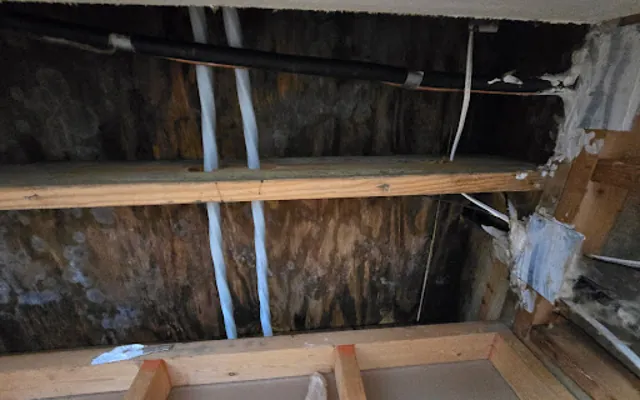
After heavy Boise snow, ice dams at the roof edge back meltwater under the shingles and into ceilings and walls. Crews trace the intrusion and dry the structure to IICRC-standard before stains and mold spread.

Technicians trace where meltwater entered, contain active drips, and check the attic, ceilings, and wall tops for how far the water has traveled.
Crews extract pooled water, remove saturated attic insulation, and take down ceiling or wall material that cannot be dried in place.
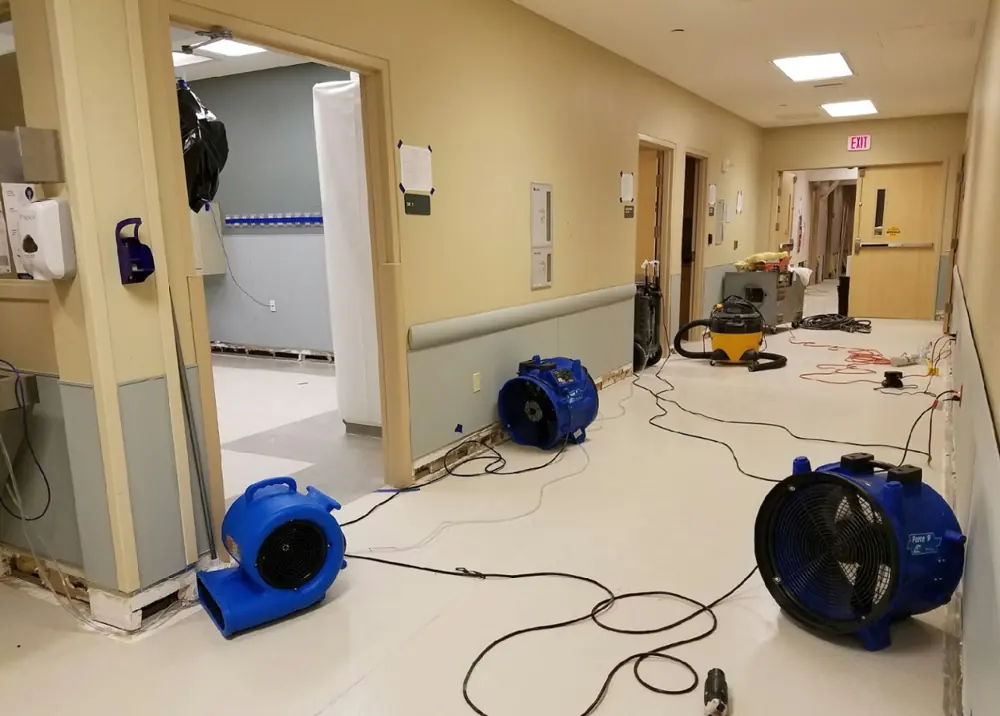
Air movers and dehumidifiers dry the roof deck, framing, and finishes, with moisture readings guiding each area to a documented dry standard.
Once dry, crews rebuild ceilings and reinsulate, and flag attic ventilation or insulation fixes for a qualified contractor to prevent the next dam.

While help is on the way, these first steps, done only where it is safe, limit the damage and protect the insurance claim.
Shut the supply off at the source, or close the home's main valve if the source is not obvious. Stopping the flow limits the damage more than anything else.
Switch off electricity to the affected area, but only if the breaker can be reached without standing in or touching the water.
Get a crew dispatched right away. The sooner extraction and drying begin, the more flooring, drywall, and belongings can be saved.
Take photos and a short video of the water and the affected rooms before anything is moved, so the insurance claim starts strong.
Ice dam water damage in Boise typically runs $1,500 to $7,500, depending on how much meltwater entered, how much insulation and ceiling were soaked, and whether the intrusion repeated over several thaw cycles. Crews document the source and moisture readings so a sudden covered loss is clearly supported for the carrier, and they can flag the ventilation fix that prevents a repeat.
Crews reach Boise and the surrounding valley fast, from the North End, the East End, and the Benches to Garden City, Southeast Boise, Meridian, Eagle, and Kuna. See the full list on the areas served across Boise page.
See all areas servedEvery loss is photographed, measured, and logged from the first visit, so the paperwork holds up with the insurance carrier.
Technicians follow recognized IICRC drying standards and prove it with daily moisture readings on Boise homes, not guesswork.
Emergency dispatch any hour of the day or night, with a real crew on the way across the valley, not a callback in the morning.
A real crew dispatched any hour, not a callback in the morning.
Trained technicians following recognized IICRC drying standards.
Truck-mounted, portable, and submersible for any size loss.
The loss is documented and billed to the carrier directly.
Heat escaping through the roof melts snow on the upper slope, and that water refreezes at the cold eave into a ridge of ice. The ridge traps more meltwater, which backs up under the shingles and finds its way into the attic, ceilings, and walls.
Ice dam leaks follow the weather. Water drips during a thaw, pauses when it refreezes, and returns with the next cycle. That on-and-off pattern hides how much insulation and framing are getting soaked between the episodes you actually see.
Interior water damage from an ice dam is often covered as a sudden event, though removing the ice itself and roof repairs may be treated separately. Crews document the intrusion path and moisture readings so the carrier has clear evidence of the loss.
Better attic insulation and ventilation keep the roof deck cold and stop the melt-and-refreeze cycle that builds a dam. Crews will point out where water entered so a qualified contractor can target the insulation, air sealing, or ventilation that actually caused it.
Boise crews are on call 24 hours a day, local and fast, and can be on the way within the hour.
Call (208) 269-9151