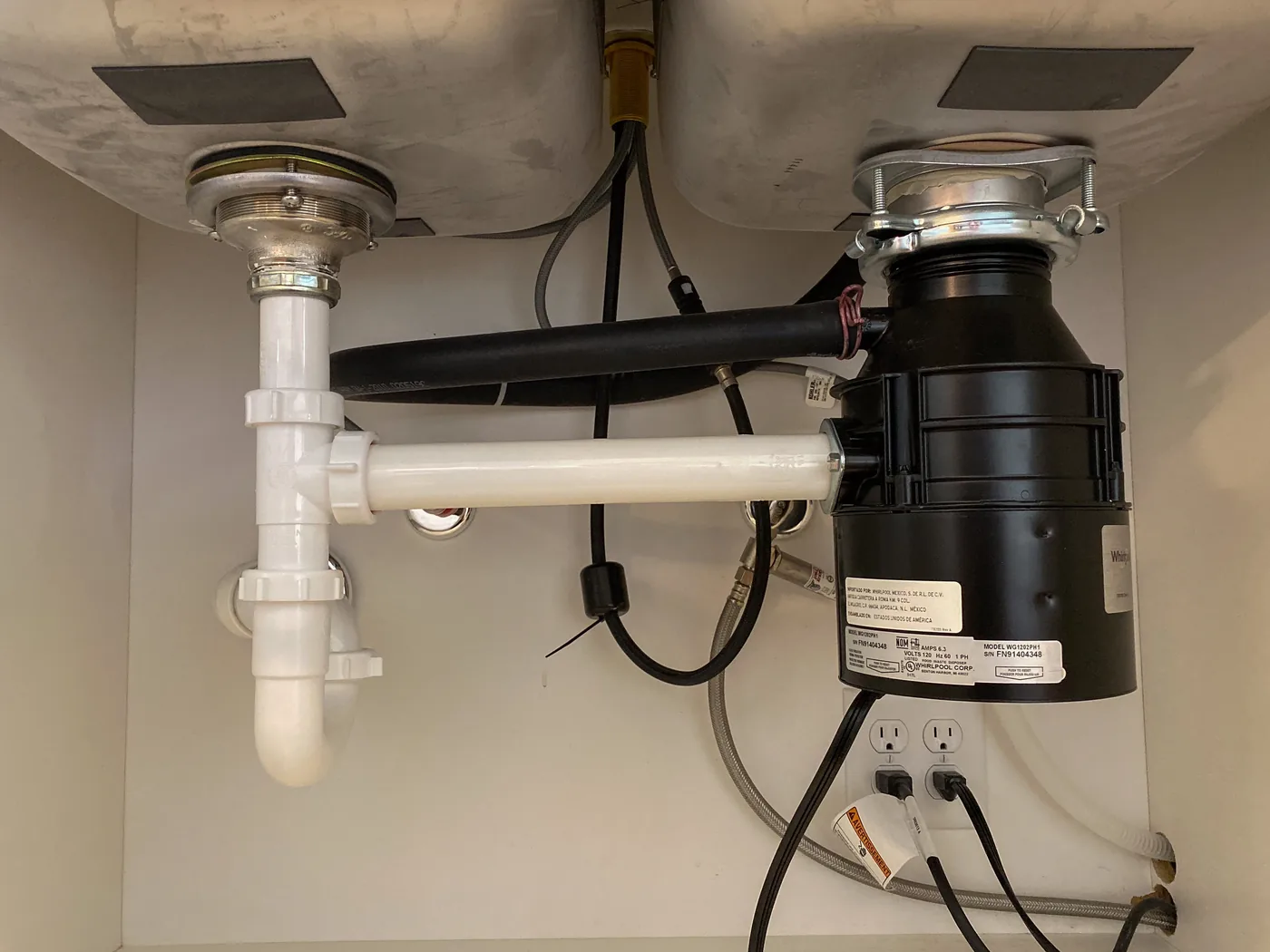
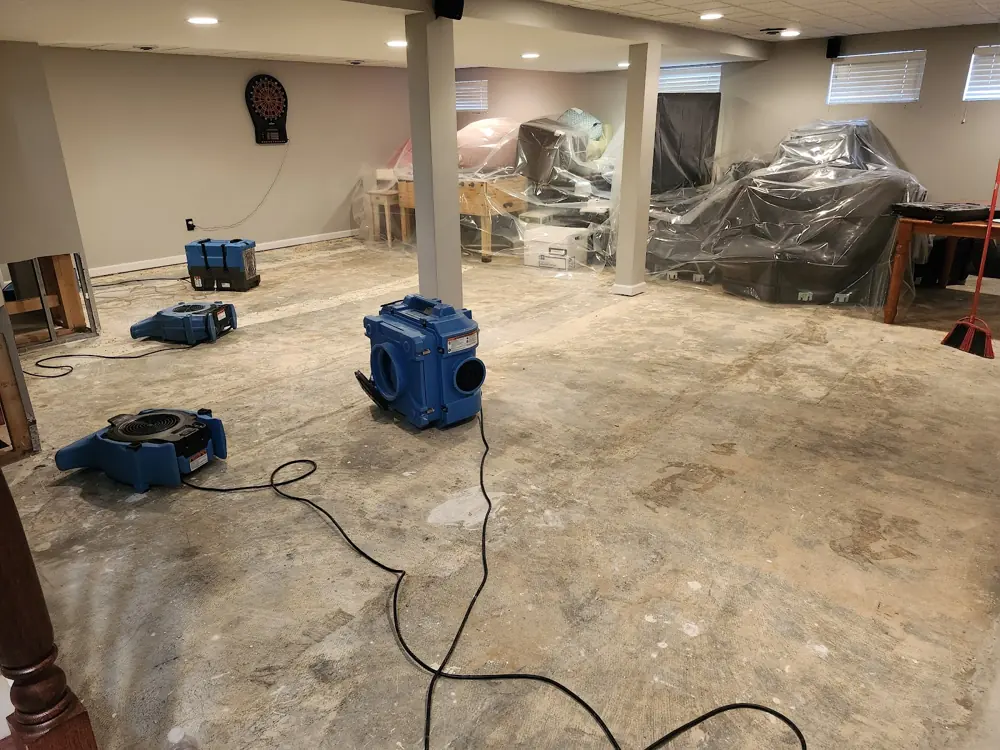
A leaking garbage disposal drips into the cabinet below a Boise kitchen sink, soaking the base and subfloor. Crews dry the structure to IICRC-standard and check for hidden moisture under the sink.

Technicians shut off the water and power to the disposal, then inspect the cabinet base, subfloor, and flooring to see how far the leak has spread.
Crews extract trapped water and remove cabinet material or flooring that is too saturated to dry in place under the sink.
Air movers and dehumidifiers dry the cabinet cavity, subfloor, and surrounding flooring, with readings tracking the area to a documented dry standard.
Once dry, crews restore the cabinet and flooring and coordinate the disposal repair or replacement with a qualified plumber.

While help is on the way, these first steps, done only where it is safe, limit the damage and protect the insurance claim.
Shut the supply off at the source, or close the home's main valve if the source is not obvious. Stopping the flow limits the damage more than anything else.
Switch off electricity to the affected area, but only if the breaker can be reached without standing in or touching the water.
Get a crew dispatched right away. The sooner extraction and drying begin, the more flooring, drywall, and belongings can be saved.
Take photos and a short video of the water and the affected rooms before anything is moved, so the insurance claim starts strong.
Garbage disposal leak cleanup in Boise usually runs $600 to $3,200, depending on how long the leak ran, whether the subfloor is soaked, and how much cabinet and flooring must be replaced. A caught seal leak sits low, while a long-running one that reached the subfloor costs more. Crews document the source and readings so a sudden covered loss is supported for the carrier.
Crews reach Boise and the surrounding valley fast, from the North End, the East End, and the Benches to Garden City, Southeast Boise, Meridian, Eagle, and Kuna. See the full list on the areas served across Boise page.
See all areas servedEvery loss is photographed, measured, and logged from the first visit, so the paperwork holds up with the insurance carrier.
Technicians follow recognized IICRC drying standards and prove it with daily moisture readings on Boise homes, not guesswork.
Emergency dispatch any hour of the day or night, with a real crew on the way across the valley, not a callback in the morning.
A real crew dispatched any hour, not a callback in the morning.
Trained technicians following recognized IICRC drying standards.
Truck-mounted, portable, and submersible for any size loss.
The loss is documented and billed to the carrier directly.
Common signs in Boise kitchens are a musty smell under the sink, a warped or discolored cabinet floor, water pooling in the base cabinet, and a soft spot in the flooring in front of the sink. Because the cabinet stays closed, the leak often shows through this secondary damage first.
Most leaks come from the seal where the unit mounts to the sink flange, a cracked or corroded housing, or loose connections to the drain and dishwasher hose. Hard water and daily use wear these seals and fittings, and any of them can drip steadily into the cabinet below.
Yes. The trapped moisture sits in the enclosed cabinet base and the subfloor beneath it, so crews dry that cavity directly rather than just wiping the visible water. Left damp, that closed space grows mold and rots the cabinet and subfloor over time.
A sudden failure is often covered, while a slow leak that was left unaddressed may be treated as maintenance. Crews document the source and moisture readings so the carrier can see whether the loss was sudden or gradual when reviewing the claim.
Boise crews are on call 24 hours a day, local and fast, and can be on the way within the hour.
Call (208) 269-9151